Start with the view
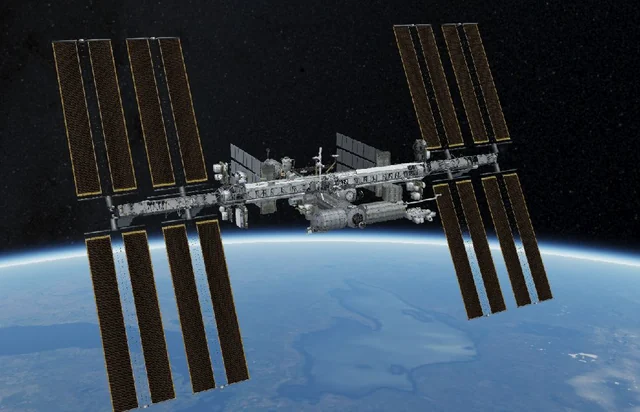
The station destination offers different viewpoints, a station guide and a simulated pass over Earth. Begin in the Cupola and switch the lighting or viewpoint to understand the structure around you. The pass is an illustrative experience, not a claim to show the station’s current live camera feed.
Play The Dark Pass
A station emergency sends you outside for a spacewalk, repairs and robotic-arm work. The fictional story asks you to navigate around structures, manage your approach and operate Canadarm2. The briefing and current objective guide you through the sequence.
Before moving, establish where the station and your target are relative to the camera. Make small corrections near hardware and use the tether and objective cues to keep your bearings. Read the mission’s current control guide when switching between astronaut movement and arm operation.
Why do astronauts float?
Gravity still acts at the ISS. The station and its crew continuously fall around Earth together, producing the experience of weightlessness. The orbit science lab lets you compare circular-orbit speed and period without confusing weightlessness with an absence of gravity.
The real station supports international research in low Earth orbit. Argus combines that setting with a reconstructed station, a simulated Earth pass and fictional mission events. Use the station guide and NASA sources for the distinction between real operations and the story.
Read the sources
Scientific sources provide context. Argus is an independent project; a source link does not imply endorsement.